
What 634 recovered carts taught us about timing
The first ninety seconds after a basket is abandoned decide most of the recovery. Here is the data behind the window, and what happens when you miss it.
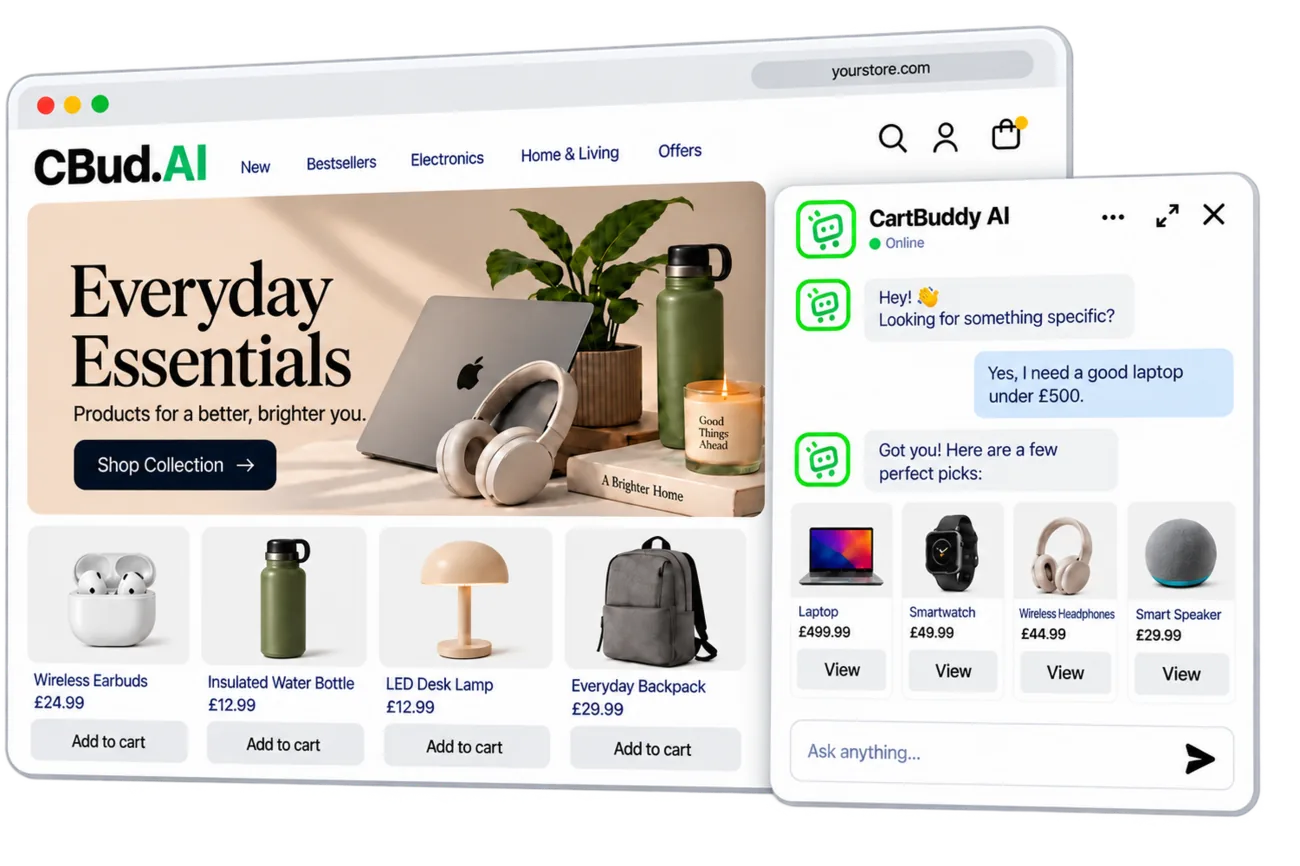
The classic abandoned-cart email arrives tomorrow morning. It is polite, branded, and roughly sixteen hours late. By the time it lands, the shopper has either bought the thing somewhere else or talked themselves out of it — and the email’s job has quietly changed from recovery to persuasion.
CartBuddy does not send emails. It opens a conversation in the tab the shopper is already in, right as they are about to leave it. That difference is where the numbers in this post come from.
- 74 s
- median time from a basket going quiet to the recovery conversation starting
- < ⅓
- of recovered conversations contained any discount at all
- 5 min
- the cliff: recoveries started inside it outnumber everything after it combined
The window is ninety seconds, and it is not symmetric
Across the recovered carts in our sample, the conversation that brought the shopper back to the checkout started a median of 74 seconds after the basket stopped moving. Recoveries that started inside the first five minutes outnumbered everything after it combined, and the curve is not gentle: it falls off a cliff.
The reason is mechanical rather than psychological. In that first minute and a half, the shopper is usually still on the store — reading a review, checking delivery, deciding. The question that stopped the checkout has an answer, and the answer is available right now. An hour later, the context has evaporated: the tab is closed, the intent is cold, and the agent is no longer answering a question but restarting a shopping trip.
Most recoveries are answers, not offers
We expected discount codes to carry the recoveries. They do not. The most common recovering move, by a wide margin, is simply answering the thing the shopper got stuck on — a delivery date for their postcode, whether the medium will fit, what the return window is. Offers appear in well under a third of recovered conversations, and mostly as a closing nudge after the real question was resolved.
A recovery tool that reaches for a discount first is spending margin to solve a problem that was an information problem.
This is the part we would have got wrong without the data. It is also the part a discount-first tool gets wrong on every store it installs on.
What this means for your store
Two things. First: the trigger that matters is hesitation, not exit. The basket going quiet while the shopper is still reading is the moment — which is why the widget watches on-page signals rather than waiting for a mouse to head for the back button.
Second: the recovery conversation has to be able to actually answer. An agent that cannot see orders, delivery estimates and live stock will fall back to offers, and you will pay for the information gap in discounts. Grounding is not a nice-to-have feature of cart recovery; it is the mechanism.